How I Turned Property Taxes into a Smarter Investment Game
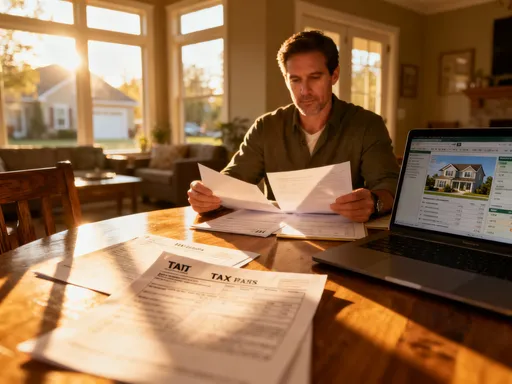
You’re not alone if property taxes feel like a money pit. I used to dread tax season—until I realized these payments could actually work *for* me, not against me. With the right strategy, what once felt like a burden became a lever for smarter real estate investing. It’s not about dodging taxes; it’s about understanding them deeply and using that knowledge to protect and grow wealth. Many homeowners and investors pay property taxes without questioning their accuracy or long-term impact, but that passive approach can cost thousands over time. The truth is, property taxes are not just a fixed cost—they are a dynamic variable in your financial equation. When managed proactively, they can reveal opportunities to increase cash flow, reduce liabilities, and make more informed investment decisions. This shift in mindset—from seeing taxes as unavoidable to treating them as a strategic lever—changed the way I evaluate every real estate opportunity. Here’s how I learned to turn tax obligations into tools for building lasting wealth.
The Hidden Cost of Ignoring Property Taxes
Most real estate investors focus on purchase price, rental income, and financing terms when evaluating a property. Yet one of the most persistent and impactful costs—property taxes—is often accepted without scrutiny. The danger in this approach lies in how silently and steadily rising taxes can erode net returns. A property that appears to generate strong cash flow on paper may become marginally profitable—or even a loss-maker—when tax assessments increase over time. This is especially true in neighborhoods experiencing rapid appreciation. As home values climb due to demand or redevelopment, local governments often respond by adjusting assessment rates, leading to higher tax bills even if rental income hasn’t kept pace. For long-term investors, this can significantly affect internal rate of return (IRR) and overall portfolio performance.
Consider two nearly identical single-family rental homes, each purchased for $300,000 and generating $2,000 per month in rent. One is located in a municipality with a property tax rate of 0.8%, while the other is in a neighboring town with a rate of 1.8%. At first glance, the difference may seem minor. However, over a ten-year holding period, that 1% gap translates into more than $36,000 in additional tax payments for the higher-tax property—money that could have been reinvested, used to pay down debt, or saved for future acquisitions. And this calculation doesn’t even account for compounding tax increases due to rising assessments. In many regions, property values are reassessed every three to five years, and if market values surge, so do tax obligations. Investors who fail to factor this into their underwriting may find themselves facing unexpected cash flow shortfalls.
The real issue isn’t just the amount paid, but the lack of awareness. Too many investors treat property taxes as a static line item, when in reality they are one of the most variable and controllable aspects of real estate ownership. Unlike mortgage rates, which are locked in for years, or insurance premiums, which adjust gradually, property taxes can jump suddenly based on local policy or reassessment outcomes. By neglecting to analyze tax trends in target markets, investors expose themselves to avoidable financial risk. A property in a high-growth area may promise strong appreciation, but if local tax rates are also climbing rapidly, the net gain could be far less than anticipated. Therefore, integrating tax analysis into the initial investment decision is not optional—it is a fundamental part of responsible real estate investing.
Why Smart Investors Audit Their Tax Bills
One of the most powerful yet underutilized tools in a real estate investor’s arsenal is the annual property tax audit. This doesn’t require an accountant or legal expert—just careful attention to detail. Every year, property owners receive a tax notice that includes the assessed value of their property and the corresponding tax liability. Many people file these documents away without a second glance, but smart investors treat them as financial reports worthy of review. The goal is not to challenge every assessment, but to identify clear discrepancies where the valuation appears inflated compared to market conditions or comparable properties. When such overvaluations are found, filing an appeal can lead to substantial savings—sometimes thousands of dollars annually.
The process begins with understanding how assessments are calculated. Most jurisdictions use a combination of recent sale prices of similar homes, square footage, lot size, age, and condition to determine value. However, assessors do not always have up-to-date or accurate information. For example, a property might be assessed as if it were recently renovated when no improvements have been made. Or, it may be compared to homes in a different neighborhood with higher demand. In one documented case, a duplex in a mid-sized city was assessed at 15% above the average sale price of comparable units. After gathering data on recent transactions and submitting a formal appeal, the owner successfully reduced the assessed value by 12%, resulting in a $1,400 annual tax reduction. Over a 20-year ownership period, that’s nearly $28,000 in savings, assuming no further increases.
Timing also plays a crucial role. Appeals must typically be filed within a specific window after the assessment notice is issued, often 30 to 60 days. Missing this deadline means waiting another year, during which time the inflated tax burden continues. Some investors set calendar reminders each year to ensure they never overlook this opportunity. Additionally, maintaining records of repairs, market trends, and neighborhood changes strengthens an appeal. Photos, appraisal reports, and even satellite imagery can serve as supporting evidence. While not every appeal will succeed, the cost of filing is usually minimal—often just a form and some documentation—making it a high-reward, low-risk strategy. The key is consistency: treating tax audits as a routine part of property management, not a one-time event.
Leveraging Tax Classifications for Maximum Advantage
One of the most overlooked aspects of property taxation is classification. Not all properties are taxed at the same rate, even within the same city or county. The tax burden depends heavily on how a property is categorized—whether as residential, commercial, industrial, or mixed-use. For investors, understanding these distinctions can unlock significant savings. A property zoned as commercial, for instance, may face tax rates up to three times higher than a similar building classified as residential. Conversely, certain reclassifications can lead to lower assessments and reduced annual bills. This is especially relevant for properties with dual-use potential, such as a home with a rental unit or a small office space.
Take the case of a homeowner who owns a two-unit building where they occupy one side and rent out the other. If the entire property is classified as rental or investment real estate, it may be subject to higher tax rates. However, by reclassifying it as owner-occupied or qualifying for homestead status, the owner could access lower residential rates and additional exemptions. In many jurisdictions, owner-occupants receive preferential treatment, including capped assessment increases and tax relief programs. The process usually involves submitting an application to the local assessor’s office and providing proof of residency, such as a driver’s license or utility bill. While rules vary by location, the potential benefit makes it worth investigating for any investor who lives on-site or plans to do so.
Another strategy involves converting underutilized space to qualify for different classifications. For example, finishing a basement to create a legal accessory dwelling unit (ADU) may increase property value, but it could also trigger a tax reassessment. However, if the ADU is used for a family member or caregiver, some areas allow it to remain classified under the primary residence’s lower tax bracket. Similarly, installing solar panels or energy-efficient systems may qualify the property for green energy tax incentives, further reducing liability. These opportunities require research into local municipal codes and communication with assessors, but they are entirely legal and often encouraged by local governments seeking to promote sustainability or affordable housing. The key is to approach reclassification not as a loophole, but as a strategic alignment with policy goals that benefit both the investor and the community.
Timing the Market Around Assessment Cycles
Just as stock investors watch earnings reports and economic indicators, real estate investors should pay close attention to local assessment cycles. These schedules—typically annual, biennial, or every five years—dictate when property values are reviewed and updated. Buying or selling at the wrong point in this cycle can result in paying significantly more in taxes than necessary. Conversely, strategic timing can lock in favorable rates for years. For example, in jurisdictions with reassessment caps—such as California’s Proposition 13—properties are taxed based on purchase price, with annual increases limited to a small percentage. This means that acquiring a home just before a new cap takes effect can preserve lower tax obligations long after market values have risen.
Consider a scenario where two buyers purchase similar homes in the same neighborhood. One buys in January, just after a county-wide reassessment that updated values to reflect a 20% market increase. The other waits until November, when no reassessment is scheduled for another 11 months. The first buyer’s tax bill is based on the new, higher valuation, while the second buyer benefits from the previous, lower assessment for nearly a full year. In markets with rapid appreciation, this timing difference can mean hundreds or even thousands of dollars in immediate savings. Over time, the compounding effect of lower base assessments can create a lasting financial advantage.
Assessment cycles also influence negotiation power. Sellers facing a pending reassessment may be more motivated to close quickly to avoid higher tax liabilities, giving buyers leverage to negotiate lower prices. On the flip side, buyers aware of an upcoming reassessment can request that sellers cover prorated tax increases or offer credits at closing. Access to public records—available through county assessor websites—allows investors to check when a property was last assessed and when the next review is due. This information should be part of standard due diligence, just like inspecting the roof or checking zoning laws. By aligning acquisition timelines with assessment calendars, investors can make more informed decisions and avoid unpleasant surprises down the road.
Using Deductions and Exemptions Without Crossing the Line
Every dollar saved on taxes is a dollar that stays in your pocket—available for reinvestment, debt reduction, or emergency reserves. Fortunately, a range of legitimate deductions and exemptions exist to help property owners reduce their tax burden. The challenge lies in identifying which ones apply and ensuring proper documentation. One of the most common is the homestead exemption, available in many states for primary residences. This exemption reduces the taxable value of a home by a fixed amount or percentage, often saving hundreds per year. To qualify, owners must prove residency, typically through voter registration, driver’s license, or utility accounts. While this doesn’t apply to pure investment properties, it can benefit investors who live in one unit of a multi-family building.
Other exemptions target specific demographics. Senior citizens, veterans, and disabled individuals may qualify for additional reductions in property taxes. In some states, seniors over 65 can freeze their assessment at current levels, preventing future increases even as market values climb. These programs are designed to help long-term residents remain in their homes, but they also offer strategic advantages for investors who meet the criteria. For example, an investor nearing retirement might shift focus to properties in areas with strong senior relief programs, enhancing cash flow in later years.
Energy efficiency incentives are another growing category. Installing solar panels, energy-efficient windows, or smart thermostats may qualify a property for tax credits or reduced assessments. Some municipalities even offer property tax abatements for green upgrades, where the added value from improvements is excluded from taxation for a set period. These programs encourage sustainable development while providing direct financial benefits. However, investors must follow guidelines carefully. Claiming exemptions without proper eligibility can trigger audits and penalties. The goal is not to stretch the rules, but to fully utilize the benefits that lawmakers have put in place. Keeping organized records—such as receipts, certification documents, and application confirmations—ensures compliance and simplifies the renewal process.
How Tax Trends Shape Investment Geography
When choosing where to invest, most people focus on job growth, school quality, or rental demand. But a smarter approach includes analyzing local tax policies as a leading indicator of market health. Municipalities with stable, predictable tax rates often reflect sound fiscal management, while areas with frequent or steep increases may signal underlying budget problems. Rapidly rising property taxes can be a red flag, especially if they outpace income growth or inflation. In some cases, cities raise taxes to cover pension obligations, infrastructure deficits, or declining business revenue. While these decisions are made at the government level, their impact is felt directly by property owners.
Consider two cities with similar housing markets. One has maintained a flat property tax rate for the past decade, supported by diversified revenue streams and responsible budgeting. The other has increased rates by an average of 5% annually over the same period due to structural deficits. Over time, the cumulative tax burden in the second city becomes significantly heavier, reducing net returns for landlords and making homeownership less affordable. This can dampen demand, slow appreciation, and increase vacancy rates. Savvy investors use this information to avoid markets with hidden fiscal risks, even if they appear attractive on the surface.
Tax trends also influence mobility and development. High tax areas may discourage new construction or renovations, as developers factor in long-term holding costs. Conversely, regions with tax incentives for redevelopment or affordable housing can attract investment and stimulate growth. Some states offer abatement programs for properties in designated revitalization zones, where taxes are reduced or frozen for 10 to 15 years. These opportunities require research, but they can provide a competitive edge. By studying tax patterns across regions, investors can identify markets that support long-term wealth building rather than eroding it. The lesson is clear: tax policy is not just a local issue—it’s a critical component of investment strategy.
Building a Tax-Aware Investment Framework
The ultimate goal is not to minimize taxes at all costs, but to integrate tax intelligence into every stage of real estate decision-making. This begins with due diligence. Before making an offer, investors should obtain the current tax bill, review the assessment history, and verify the property classification. They should also research local exemption programs and upcoming reassessment schedules. This information should be factored into cash flow projections and return calculations. A property with slightly higher taxes but strong appreciation potential may still be a good buy, while one with hidden tax risks may need to be reconsidered.
Over time, this tax-aware approach becomes a repeatable framework. It involves regular review of tax notices, proactive appeals when warranted, and strategic use of classifications and exemptions. It also means staying informed about local policy changes that could affect future liabilities. Just as investors monitor interest rates or rental trends, they should track tax legislation and municipal budgets. This level of awareness doesn’t guarantee perfect outcomes, but it significantly reduces uncertainty and enhances control over financial results.
True wealth in real estate comes not from chasing quick wins or aggressive loopholes, but from mastering the fundamentals—including the often-overlooked role of property taxes. By treating taxes not as an expense to endure, but as a variable to manage, investors can protect their profits, improve returns, and build more resilient portfolios. The shift starts with a simple question: “Do I really understand what I’m paying—and why?” From there, every tax bill becomes an opportunity to learn, adjust, and grow. That’s not just smart investing. It’s sustainable wealth building.