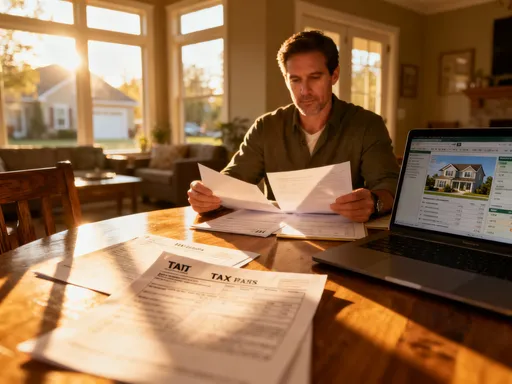
How I Outsmarted Property Taxes Without Breaking a Sweat
You buy a house thinking it’s your biggest win—until the property tax bill hits. I’ve been there, staring at numbers that made no sense, feeling trapped. But after years of trial, error, and real estate headaches, I cracked the code. It’s not about dodging taxes—it’s about playing smart. This is how I turned confusion into control, saved serious money, and built a strategy that actually works. Let’s walk through it together.
The Hidden Cost No One Warns You About
Homeownership is often celebrated as a cornerstone of financial stability and personal achievement. The moment keys are handed over, a sense of accomplishment fills the air. Yet, for many, that pride fades quickly when the first property tax bill arrives. Unlike mortgage payments, which are typically fixed or predictable, property taxes can shift year after year, often without warning. What starts as a manageable expense can grow into a significant drain on household budgets, especially in regions where assessments rise faster than income. This silent cost is frequently overlooked during the homebuying process, where attention is focused on loan terms, credit scores, and down payments. But the reality is that property taxes can erode returns just as effectively as high interest rates or maintenance costs.
Property taxes are levied by local governments to fund essential services such as schools, public safety, road maintenance, and community development. The amount owed is determined by multiplying the assessed value of a property by the local tax rate, which varies widely across counties and municipalities. For example, one homeowner in a suburban county might pay 1.2% of their home’s value annually, while another in a neighboring district pays closer to 2.5%. These differences are not arbitrary—they reflect funding needs, voter-approved levies, and historical budgeting practices. Over time, even modest tax rates compound, especially as property values increase. A home valued at $300,000 with a 1.5% tax rate results in an annual bill of $4,500. If that value grows to $400,000 over ten years due to market appreciation, the tax bill climbs to $6,000—without any change in policy or local rates.
The danger lies in assuming this cost is fixed or inevitable. Many homeowners accept their tax notices at face value, unaware that assessments can contain errors or that market comparisons may not reflect their property’s true condition. In some cases, a neighbor’s recent sale price can trigger a broader reassessment, increasing taxes for an entire neighborhood. This ripple effect often catches owners off guard, particularly those who made no improvements but still see higher bills. Real-life examples abound: a retiree in a Midwestern town saw her tax bill jump 18% after a wave of out-of-state buyers drove up local prices; a young family in the South faced a $1,200 increase following a citywide revaluation, despite no changes to their home. These situations highlight a critical truth—awareness is only the first step. Without a proactive strategy, even well-reasoned investments can become financial burdens.
Why “Set It and Forget It” Is a Wealth Killer
The “set it and forget it” mentality is comforting. Once a home is purchased and the mortgage is secured, many owners shift focus to daily life, assuming that property taxes will remain stable or increase predictably. This passive approach, however, is one of the most common and costly mistakes in real estate ownership. Taxes are not utilities with regulated rates; they are dynamic, locally determined obligations that respond to market shifts, policy changes, and administrative decisions. Ignoring them is akin to ignoring investment statements or credit reports—eventually, the consequences become unavoidable. Over time, unchecked tax growth can significantly reduce cash flow, limit equity accumulation, and diminish overall returns on investment.
Consider two hypothetical homeowners: one who reviews tax notices annually and files appeals when necessary, and another who pays without question. Over a 15-year period, the proactive owner challenges assessments three times, successfully reducing the tax burden by an average of 12% each time. The passive owner pays every bill in full, even as assessments rise due to neighborhood trends. By year ten, the difference in total tax payments exceeds $18,000. That amount, if invested at a conservative 6% annual return, could grow to over $30,000. More importantly, the passive owner has less disposable income each year, limiting their ability to save, renovate, or respond to emergencies. The gap isn’t caused by bad luck—it’s the result of a lack of engagement.
Beyond direct costs, inaction leads to missed opportunities for savings. Many jurisdictions offer exemptions or relief programs, but they require applications and documentation. A homestead exemption, for instance, can reduce taxable value by 10% or more, but only if the owner claims it. Senior citizens may qualify for freezes or caps on tax increases, yet thousands fail to apply due to lack of awareness or perceived complexity. Similarly, income-based relief programs exist in several states, targeting low- and moderate-income homeowners, but participation rates remain low. These tools are not hidden—they are simply overlooked by those who treat taxes as unavoidable rather than manageable. The mindset shift is crucial: property taxes are not a fixed expense, but a negotiable component of homeownership that rewards attention and diligence.
Mapping Your Risk: What Triggers a Tax Spike?
Understanding what drives property tax increases is essential to managing them effectively. While some fluctuations may seem random, most spikes are the result of identifiable triggers. Recognizing these factors allows homeowners to anticipate changes and respond proactively. One of the most common causes is a reassessment following property improvements. Adding a new roof, finishing a basement, or building a deck can increase a home’s assessed value—even if the owner doesn’t plan to sell. Local assessors use these upgrades as indicators of higher market value, which directly impacts the tax calculation. In some cases, the increase can outweigh the benefit of the improvement, particularly if the upgrade doesn’t align with neighborhood norms.
Another major trigger is neighborhood gentrification. As areas attract new residents, businesses, and investment, property values rise across the board. A once-affordable neighborhood may see rapid appreciation due to improved infrastructure, new schools, or cultural developments. While this is often seen as a positive trend, it comes with a financial trade-off: higher assessments and larger tax bills. Homeowners who bought early may welcome the equity growth, but fixed-income residents or long-term owners on limited budgets can find themselves priced out of their own communities. Municipal budget decisions also play a role. When local governments face shortfalls, they may increase tax rates or eliminate exemptions to balance the books. These policy shifts are often announced with little notice, leaving residents scrambling to adjust.
Additionally, broader economic trends influence tax outcomes. Low interest rates encourage more buyers, driving up demand and prices. In hot markets, even modest homes can sell for tens of thousands above asking, setting new benchmarks for assessors. A single high-value sale on a block can prompt a wave of reassessments, affecting nearby properties regardless of condition. Similarly, changes in state legislation—such as limits on assessment increases or new relief programs—can create sudden shifts in tax liability. The key is not to resist all change, but to understand it. By monitoring local real estate activity, staying informed about municipal budgets, and reviewing assessment notices carefully, homeowners can identify warning signs early and take action before costs spiral.
The Appeal Game: When and How to Fight Back
Challenging a property tax assessment is not an act of defiance—it’s a responsible exercise of homeowner rights. In many jurisdictions, the appeal process is designed to ensure fairness and accuracy in valuations. Yet, a vast majority of owners never file an appeal, either out of fear, confusion, or the belief that the system is rigged. The truth is quite different: thousands of successful appeals are processed every year, often resulting in significant savings. The process is structured, transparent, and accessible to anyone willing to gather the necessary evidence and follow the steps. It begins with understanding the assessment notice, which should include the property’s assigned value, the methodology used, and the deadline for appeal.
To build a strong case, homeowners must collect comparable sales data—recent transactions of similar homes in the same area. These “comps” should match in size, age, condition, and location as closely as possible. Public records, real estate websites, and local assessor offices are reliable sources. Discrepancies between the assessed value and market reality are common. For instance, a home assessed at $450,000 may have three comparable sales in the $400,000 range, all with similar or better features. This gap provides a solid basis for appeal. Other factors, such as structural damage, outdated systems, or poor lot positioning, can also justify a lower valuation. Photographs, repair estimates, and appraisals strengthen the argument.
Timing is critical. Appeals must be filed within a specific window, often 30 to 60 days after the notice is issued. Missing the deadline forfeits the right to challenge for that year. Once submitted, the case may be reviewed by an assessor, heard by a review board, or require a formal hearing. Preparation is key: presenting organized documentation, speaking clearly, and remaining respectful increases the chances of success. In one documented case, a homeowner in a Northeastern city reduced her assessment by 15% after showing that her property had water damage and that recent sales in her neighborhood were below the assessed value. The result? A tax savings of $1,100 annually. This wasn’t luck—it was diligence. The appeal process doesn’t guarantee victory, but it offers a legitimate path to fairness, and for many, it pays for itself in the first year.
Leverage Legal Loopholes—The Right Way
The term “loophole” often carries a negative connotation, implying exploitation or deceit. In the context of property taxes, however, it simply means using available legal provisions to reduce liability. These tools are not secret—they are established policies designed to support certain groups or encourage responsible ownership. The most widely available is the homestead exemption, which shields a portion of a home’s value from taxation for primary residents. In some states, this can amount to a $25,000 to $50,000 reduction in taxable value. For a home valued at $350,000, that could translate to hundreds of dollars in annual savings. Yet, in many cases, the exemption is not automatic—it must be applied for, and renewal may be required every few years.
Senior citizens often have access to additional protections. Several states offer tax freezes, which lock the assessment at a certain level even as property values rise. Others provide deferral programs, allowing older homeowners to delay payment until the property is sold or transferred. These programs help prevent displacement due to rising costs and support aging in place. Income-based relief is another option in select regions, targeting households below a certain earnings threshold. Eligibility varies, but documentation such as tax returns or proof of income is typically required. While these programs don’t eliminate taxes, they make them more manageable for those most vulnerable to increases.
For investors, tax efficiency involves different strategies. Holding properties through certain legal entities, such as limited liability companies (LLCs), can offer advantages in some jurisdictions. Depreciation is another powerful tool: while not reducing property taxes directly, it lowers taxable income from rental operations, improving overall cash flow. Careful record-keeping, including receipts for improvements and maintenance, supports accurate cost basis reporting and potential deductions. None of these methods involve deception or risk. They are part of a broader financial discipline that treats taxes as a variable cost to be optimized, not an unavoidable burden. The goal is not to pay less than owed, but to pay no more than necessary—using the system as intended.
Building a Tax-Resilient Portfolio
For those with multiple properties, tax strategy must evolve from single-asset management to portfolio-wide planning. Real estate wealth is not just about acquiring properties in desirable locations—it’s about understanding how each asset performs within its tax environment. A property in a high-appreciation market may seem ideal, but if it’s paired with steep tax rates or frequent reassessments, the net return could be lower than expected. Conversely, a modest home in a tax-friendly jurisdiction might generate stronger long-term cash flow. The smart investor evaluates both market potential and tax efficiency, creating a diversified portfolio that balances risk and reward.
Geographic diversification plays a key role. Some states and counties are known for stable or low property tax rates, while others have a history of rapid increases. Researching these patterns before acquisition allows investors to position themselves advantageously. Monitoring legislative trends is equally important. Proposed changes to assessment rules, exemption limits, or municipal funding models can signal future tax shifts. Subscribing to local government updates, joining homeowner associations, or consulting tax professionals helps stay ahead of changes. Additionally, mixing property types—residential, commercial, rental—can create natural offsets. For example, commercial properties may be assessed differently than homes, offering opportunities for strategic valuation.
Technology also supports tax resilience. Digital tools can track assessment dates, store documentation, and send alerts for appeal deadlines. Cloud-based spreadsheets allow investors to model tax scenarios across their holdings, projecting future liabilities under different appreciation rates. Some platforms even integrate with local assessor databases, providing real-time comparisons. These resources reduce the administrative burden and increase accuracy. Over time, a well-structured portfolio not only withstands tax fluctuations but leverages them—using savings from one property to fund improvements or acquisitions elsewhere. The result is a self-reinforcing cycle of growth and stability.
From Fear to Freedom: Making Taxes Work for You
The ultimate goal is not to eliminate property taxes—they are a necessary part of community funding and infrastructure. Instead, the aim is to transform them from a source of anxiety into a predictable, manageable expense. This shift begins with mindset. Viewing taxes as an opportunity for optimization, rather than an unavoidable loss, empowers homeowners to take control. It means reading notices carefully, asking questions, and using available tools without hesitation. It means recognizing that small actions—filing for an exemption, gathering comps, attending a review board meeting—can yield lasting benefits.
The strategies outlined here are not one-time fixes but ongoing habits. Regular monitoring, timely appeals, and strategic planning form the foundation of tax-smart ownership. They require modest effort but deliver outsized returns. More than financial savings, they bring peace of mind. There is confidence in knowing your assessment is fair, your exemptions are claimed, and your portfolio is structured for resilience. This is the essence of financial maturity: not avoiding costs, but managing them with clarity and purpose.
Property taxes will always be part of homeownership. But they don’t have to diminish your success. With the right knowledge and approach, they become a manageable factor in a broader strategy of wealth building. You don’t need to be an expert—just engaged. By staying informed, acting proactively, and using the system as designed, you turn a potential burden into a lever for long-term financial health. The freedom you seek isn’t in escaping taxes, but in mastering them. And that kind of control? That’s worth every effort.