How I Found Calm Through Yoga and Ancient Wisdom
Have you ever felt overwhelmed, like your mind won’t quiet down no matter what? I’ve been there. After years of stress and sleepless nights, I turned to yoga and mindfulness rooted in traditional Chinese wellness principles. It wasn’t a quick fix, but over time, I noticed real changes—better focus, deeper breath, and a calmer heart. This is my journey and what actually worked, shared simply and honestly, without hype or empty promises. The path to inner peace doesn’t require dramatic changes or expensive retreats. It begins with small, consistent choices that honor the body’s natural rhythms and the mind’s need for stillness. What follows is not a miracle story, but a practical one—one built on patience, awareness, and the quiet wisdom of practices that have endured for centuries.
The Burnout That Changed Everything
For years, I believed that pushing through fatigue was a sign of strength. I managed a busy household, held down a full-time job, and tried to be present for my family—all while ignoring the growing weight in my chest and the constant hum of anxiety in the background. Sleep became elusive. I would lie awake, replaying conversations or worrying about tasks for the next day. When I did sleep, it was shallow and unrestful. Mornings brought no sense of renewal, only the need to start again. Headaches became routine. My digestion suffered. I snapped at small things—a misplaced dish, a delayed grocery run. I wasn’t ungrateful for my life, but I felt disconnected from it, as if I were watching myself from a distance.
The turning point came one winter evening. I was making dinner, and my youngest spilled a glass of juice across the kitchen floor. Instead of cleaning it up calmly, I burst into tears. Not because of the mess, but because it felt like the final straw in a life built on invisible strain. That moment forced me to admit what I’d been avoiding: I was not well. I had been treating my body like a machine, fueling it with caffeine and willpower, but no amount of determination could override the signals of imbalance. I went to my doctor, who ran tests. There was no serious illness, but she said something that stayed with me: “Your body is under chronic stress. It’s not just mental—it’s physiological.”
I tried the usual fixes. I downloaded meditation apps, bought herbal supplements, and even tried intense workout routines, hoping exhaustion would quiet my mind. But the more I pushed, the more I felt drained. High-intensity exercise left me jittery. Supplements caused stomach upset. Meditation felt frustrating when my thoughts wouldn’t slow down. I began to wonder if peace was even possible for someone like me—someone with responsibilities, a full schedule, and real-life pressures. That’s when I started looking beyond Western solutions and discovered a different approach: one that didn’t demand more effort, but invited gentle restoration.
Rediscovering Balance: The Core Idea of Traditional Chinese Wellness
My search led me to traditional Chinese wellness, a system of health that views the body and mind as deeply interconnected. At its heart is the concept of Qi (pronounced “chee”), often described as vital energy or life force. Unlike the Western model, which often isolates symptoms and treats them separately, Chinese wellness focuses on balance. When Qi flows smoothly through the body’s pathways—called meridians—health is maintained. When it becomes blocked or depleted, symptoms arise. These aren’t seen as random malfunctions, but as messages from the body that harmony has been disrupted.
What struck me was how accurately this explained what I had been feeling. My fatigue wasn’t just from lack of sleep—it was a sign of depleted Qi. My irritability pointed to liver Qi stagnation, a common pattern linked to stress and emotional suppression. My poor digestion suggested spleen Qi weakness, often worsened by overthinking and irregular eating habits. These weren’t diagnoses, but frameworks that helped me understand my experience in a new way. Instead of seeing my symptoms as enemies to fight, I began to see them as signals to listen to.
This philosophy doesn’t reject modern medicine—it complements it. While Western science excels at acute care and diagnostics, traditional Chinese wellness offers a map for prevention and daily living. It emphasizes rhythm: eating in tune with the seasons, resting when the body asks, and moving in ways that support energy rather than drain it. I learned that true wellness isn’t about achieving perfection, but about returning to balance again and again. This shift in mindset was crucial. I stopped chasing quick fixes and started paying attention to what my body actually needed. And one of the most powerful tools for restoring balance, I discovered, was yoga.
Why Yoga Works When You’re Out of Sync
Yoga, as I came to understand it, is much more than physical exercise. It is a practice of integration—aligning breath, movement, and awareness to calm the nervous system and support the body’s natural healing capacity. Modern research confirms what ancient traditions have long known: yoga activates the parasympathetic nervous system, the part responsible for rest and digestion. When we’re stressed, the sympathetic nervous system dominates, keeping us in “fight or flight” mode. Yoga helps shift us back into “rest and digest,” lowering heart rate, reducing cortisol levels, and improving oxygen flow.
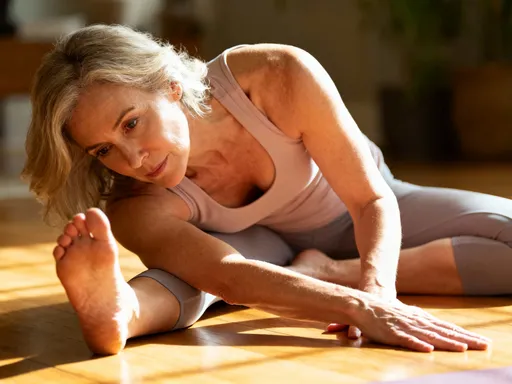
The physical postures, or asanas, play a key role in this process. Stress doesn’t just live in the mind—it settles in the body. Tight shoulders, clenched jaws, shallow breathing—these are all physical manifestations of unresolved tension. Yoga postures gently stretch and release these areas, helping to unblock stagnant energy. For example, forward bends like Child’s Pose soothe the nervous system and encourage introspection. Twists aid digestion and help clear emotional residue. Even simple movements like raising the arms overhead can create a sense of expansion, counteracting the contracted posture of chronic stress.
But perhaps the most transformative aspect of yoga is the breath. In traditional Chinese wellness, breath is considered a direct carrier of Qi. When we breathe shallowly, as we often do when stressed, we limit energy flow. Yoga teaches us to breathe deeply and rhythmically, using the diaphragm to draw air into the lower lungs. This not only oxygenates the blood but also sends a signal to the brain that we are safe. Over time, this practice rewires the body’s stress response, making calm more accessible even in challenging moments. Yoga, in this sense, becomes a form of moving meditation—one that doesn’t require emptying the mind, but simply returning to the present through the anchor of breath.
My Go-To Yoga Moves for Daily Calm (No Experience Needed)
When I first started, I worried that yoga required flexibility, special clothing, or hours of free time. I quickly learned that none of that is true. The most effective practices are often the simplest. What matters is consistency, not complexity. I now rely on three foundational poses that I can do anywhere, even in the middle of a chaotic day. They require no prior experience, and each takes only a few minutes. These are not advanced postures—they are tools for restoration.
The first is Child’s Pose, or Balasana. I return to this posture whenever I feel overwhelmed. Kneeling on the floor, I sit back on my heels, fold forward, and rest my forehead on the mat. My arms can extend forward or rest alongside my body, palms up. This pose gently compresses the abdomen, which can help regulate breathing and calm the nervous system. It also creates a sense of safety, like a physical return to stillness. I focus on lengthening my exhales, imagining tension melting into the floor. Even one minute in Child’s Pose can reset my mood and clarity.
The second is Cat-Cow, a flowing movement that warms up the spine and releases tension in the back and neck. On hands and knees, I alternate between arching the spine (Cow) and rounding it (Cat), coordinating each movement with the breath. Inhale to lift the head and tailbone, exhale to tuck the chin and draw the belly in. This rhythmic motion not only improves spinal flexibility but also synchronizes breath and movement, drawing attention away from mental chatter. I often do five to ten rounds in the morning or after sitting for long periods.
The third is Legs-Up-the-Wall, or Viparita Karani. This is my favorite for evenings or after a long day on my feet. I lie on my back with my legs extended vertically against a wall, hips close to the baseboard. My arms rest at my sides, palms up. This gentle inversion encourages blood flow from the legs back to the heart, reduces swelling, and signals the body to relax. I stay in this pose for five to fifteen minutes, focusing on slow, deep breathing. It’s especially helpful when I feel restless but know I need rest. These three poses form the core of my practice—not because they are impressive, but because they work.
Breath as Medicine: Simple Techniques I Use Every Morning
If yoga postures are the body’s language, breath is its voice. I’ve come to see breathwork as the most accessible and powerful tool for self-regulation. Unlike diet or exercise, which require time and planning, breath is always available. And the way we breathe directly influences our emotional state. Shallow, rapid breathing fuels anxiety. Slow, deep breathing calms it. The key is not to force the breath, but to guide it with awareness.
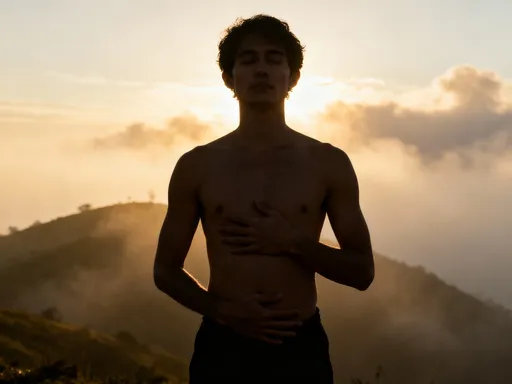
One of my daily practices is diaphragmatic breathing, also known as belly breathing. I place one hand on my chest and the other on my lower abdomen. As I inhale through the nose, I focus on expanding the belly, not the chest. The hand on the abdomen should rise; the one on the chest should stay still. This ensures I’m using the diaphragm, which massages the internal organs and stimulates the vagus nerve—a major pathway for calming the nervous system. I practice this for three to five minutes each morning, often while sitting in a chair with my feet flat on the floor.
Another technique I use is the 4-7-8 breath. I inhale quietly through the nose for a count of four, hold the breath for seven counts, and exhale slowly through the mouth for eight counts. This ratio extends the exhale, which naturally activates the parasympathetic nervous system. I find it especially helpful when I wake up anxious or need to transition from work to home life. It doesn’t eliminate stress, but it creates space between stimulus and response—space where choice becomes possible.
I also practice alternate nostril breathing, or Nadi Shodhana, which has roots in both yoga and traditional Chinese wellness. I use the right thumb to close the right nostril and inhale through the left. Then I close the left nostril with the ring finger, release the right, and exhale. I inhale through the right, close it, release the left, and exhale—completing one cycle. This practice is said to balance the left and right hemispheres of the brain and harmonize energy flow. I do five to ten cycles before meditation or when I need mental clarity. These techniques don’t require special training. They require only the willingness to pause and pay attention.
Making It Stick: Building a Realistic Routine That Fits Your Life
One of the biggest obstacles to any wellness practice is consistency. I used to think I needed to do an hour of yoga every day to see results. That mindset set me up for failure. Life is unpredictable. There are sick children, work deadlines, and days when just getting through is an achievement. What changed everything was shifting my goal from duration to presence. I committed to just five minutes a day. That small promise was easy to keep, and it built momentum.
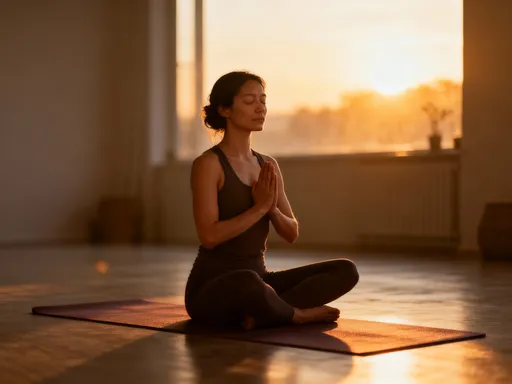
I started by pairing my practice with an existing habit—drinking morning tea. While the kettle boiled, I rolled out my mat and did a short sequence: Cat-Cow, Child’s Pose, and a few minutes of diaphragmatic breathing. The tea became my cue. Over time, this tiny ritual became non-negotiable, like brushing my teeth. On days when I felt more energy, I extended the practice. On hard days, five minutes was enough. The key was showing up, not performing.
I also learned to be flexible. Some days, I practice in the morning. Others, I do Legs-Up-the-Wall before bed. I don’t wait for the “perfect” time or space. I’ve done breathwork in my car during school pickup, stretched on the living room floor while dinner cooked, and rested in Child’s Pose during a work break. The goal isn’t perfection—it’s integration. By anchoring the practice to daily life, it stopped feeling like an extra task and started feeling like self-care. Over months, those five minutes grew into a foundation of calm that supported everything else.
Listening to Your Body: The Most Important Skill Nobody Talks About
Perhaps the most profound change I’ve experienced isn’t visible—it’s a shift in awareness. I’ve learned to listen to my body with curiosity rather than judgment. Before, I ignored fatigue until it became burnout. Now, I notice the subtle signs: tightness in the shoulders, a shallow breath, a slight headache. These are not flaws—they are invitations to pause and respond with care. This awareness has transformed not just my health, but my relationships and focus.
Some days, my body asks for movement. Other days, it asks for rest. I’ve stopped forcing myself into a rigid routine and started adapting my practice to my energy levels. If I’m exhausted, I skip the postures and focus on breath or stillness. If I’m restless, I add gentle stretches. This responsiveness has made my practice sustainable. It’s no longer about pushing through, but about honoring what is.
This skill extends beyond the mat. I’ve become more patient with my children, more present in conversations, and more aware of how my choices affect my well-being. I eat more mindfully. I set boundaries without guilt. I notice beauty in small moments—a warm cup of tea, sunlight through the window. This isn’t because I’ve become a different person, but because I’ve learned to tune in. The body speaks in whispers before it shouts. When we listen, we gain not just health, but wisdom.
Yoga and mindful movement aren’t about perfection—they’re about presence. Blending ancient Chinese principles with accessible yoga techniques helped me reclaim my energy and peace, one breath at a time. This isn’t a cure-all, but a sustainable way to stay grounded. With patience and practice, anyone can begin—no special gear, no guru, just you and your willingness to try. The journey doesn’t demand more from you. It simply asks you to return, again and again, to the quiet truth within.